By Steven Pust, Executive Trainer & Running Coach — NW Fitness Project (Seattle, WA)
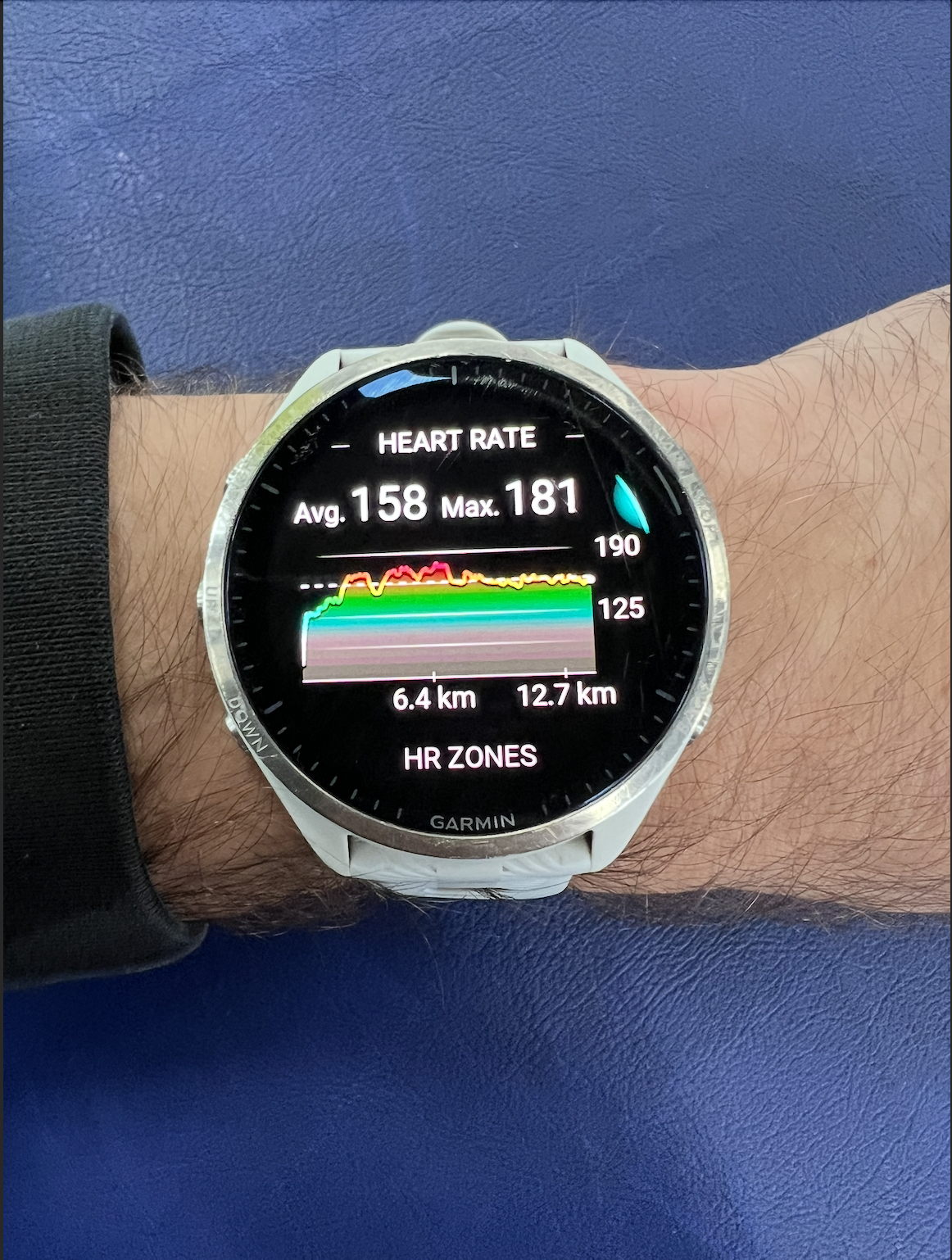
Let’s talk about heart rate zones.
Not in a “your watch told you to stay in Zone 2 so now you’re power-walking uphill at 3 mph questioning all your life choices” way…
But in a real-world, this guy practices what he preaches type-of-way. Where heart rate zones are tools for better training, better recovery, and better long-term progress, not rigid rules handed down by your watch.
As someone currently training for Ironmans and actively coaching athletes in Ironman, triathlons, marathons, and general running, I see firsthand how misunderstood zones can be - and how powerful they become when applied with context.
You see…heart rate zones are like relationships.
Everyone on social media tells you there’s “one right way.”
But anyone who’s actually lived through training cycles knows:
It’s nuanced. It’s contextual. And it depends on what phase of life (and training) you’re in.
Also… Valentine’s Day is this week. And if your heart rate spikes every time you look at your watch… we should probably talk. ❤️🔥

First: What Are Heart Rate Zones Actually For?
Heart rate zones aren’t rules. They’re feedback.
They help us:
Regulate effort
Manage recovery
Preserve quality in hard sessions
Avoid turning every run into a weird, medium-hard gray zone slog
They’re not there to control you, they’re there to inform you.
And if you’ve trained long enough, you already know:
Some days your body lies. Some days your watch lies. And some days both lie at the same time.
Which is why zones must be interpreted, not obeyed.
Why Lower Zones Matter
(Especially at Higher Volume)
Zone 2 has become the internet’s favorite child. And honestly, it deserves some love.
Low-intensity training:
Improves mitochondrial density
Enhances fat oxidation
Supports cardiovascular efficiency
Allows higher overall training volume without frying your nervous system
This is why polarized models (lots of easy, some very hard) work so well at higher volumes.
Research supports this:
Seiler & Tønnessen (2009) showed that elite endurance athletes tend to distribute training with a large volume of low-intensity work and a small amount of high-intensity work… not a ton in the middle. PMID: 20861519
Stöggl & Sperlich (2014) found that polarized training led to greater performance improvements than threshold-heavy approaches. PMID: 24550842
At NW Fitness Project, when an athlete is logging higher mileage, balancing demanding work schedules, or carrying life stress, we often emphasize lower zones not because they’re magical but because they protect recovery, preserve quality, and allow consistency to compound over time.
Why Higher Intensity Matters (Especially for Busy Humans)
Now — if you’re a time-crunched athlete (hello Seattle professionals 👋), you might not have 90 minutes to float around Zone 2 five days a week.
That’s okay.
Higher-intensity training:
Drives VO₂max improvements
Improves running economy
Builds speed and power efficiently
Research backs this too:
Laursen & Jenkins (2002) showed that high-intensity interval training can significantly improve endurance performance with lower time commitment. PMID: 11772161
The key is not avoiding intensity.
The key is preserving interval integrity.
Preserving Interval Integrity (This IS the Secret Sauce)
Here’s what happens when heart rate zones are misused:
Easy days become too hard.
Hard days become not quite hard enough.
Everything lives in the gray zone.
And then people say, “Training doesn’t work for me.”
No. Training works.
But only if you let it.
When we say “preserve interval integrity,” we mean:
Hard days should be hard enough to drive adaptation
Easy days should be easy enough to allow recovery
Medium days should be intentional, not accidental
If your easy runs creep into Zone 3, your intervals suffer.
If your intervals creep into Zone 3, your easy days suffer.
If everything is Zone 3, your progress suffers.
Heart rate zones are one tool we use to keep effort where it belongs, not because we worship the zones, but because we respect the process.

Why HR Zones Are Not Binary (And Why Social Media Gets This Wrong)
Social media loves:
“Zone 2 is king.”
“Threshold is everything.”
“HIIT beats all.”
“You’re training wrong.”
But real coaching lives in the gray.
Because:
Training age matters.
Injury history matters.
Weekly volume matters.
Stress, sleep, nutrition, and life context matter.
Goals matter.
There is no universal “best zone.”
There is only the right zone for the right athlete at the right time.
And that’s where coaching lives.

How WE Use HR Zones With Athletes at NW Fitness Project
As someone currently training for Ironman and coaching endurance athletes across a variety of disciplines, I’ve lived on both ends of the spectrum:
High-volume aerobic builds
Time-crunched, performance-focused cycles
Injury comeback phases
Peak performance blocks
At NWFP, we use HR zones to:
Guide recovery
Protect hard sessions
Build durability
Improve performance without burnout
We never use zones to limit athletes… we use them to free athletes from guessing.
Valentine’s Day Reminder ❤️
If your heart rate is always high, it’s not love - it’s stress.
And if your training always feels hard, it’s not dedication - it’s probably mismanagement.
This Valentine’s Day, show your heart some love:
Run easy when it’s easy.
Go hard when it’s hard.
Recover like your progress depends on it, because it does.
Want Help Applying This to Your Training?
If you’re:
Confused by zones
Stuck in a performance plateau
Feeling tired all the time
Or just want smarter training that fits your life
We’d love to help.
Next Step: Book a Consultation
Let’s talk about your goals, your schedule, your training history, and how to make heart rate zones work for you, not against you.
Book a Personal Training Consult
Your heart deserves better training. And your goals deserve better planning.
Let’s build both.