
Hybrid Training: How to Get Strong and Train for Running
By Steven Pust, Executive Trainer & Running Coach — NW Fitness Project (Seattle, WA)

Hybrid training is the art and science of blending strength and endurance and it has become one of the most empowering ways to train. Whether you're chasing a PR, running your first 5K, or simply wanting to feel strong and resilient in your day-to-day life, combining smart lifting with smart running gives you the best of both worlds.
This approach isn’t theoretical for me. Before coaching at NW Fitness Project, I spent years as a professional pole vaulter, a rock climber, a runner, and most recently a competitive triathlete. Across every sport, one universal truth kept showing up: Strength training was the multiplier. The weight room is what made me faster on the runway, more durable on long rides, improved my running efficiency, and made me more resilient overall.
And the research agrees. Runners Need Strength Training (Yes—Need)
Runners love to… you guessed it…RUN. And you should! But running alone doesn’t give your bones, tendons, and connective tissue the full spectrum of loading they need to stay healthy or level-up performance.

Here’s what the research says:
Number 1 - Strength Training Improves Running Economy
Running economy (how efficiently you use oxygen at a given pace) is one of the strongest predictors of long-term running performance. And it’s incredibly trainable (like most things we focus on at NWFP).
Multiple studies have shown that heavy and explosive strength training significantly improve running economy:
Paavolainen et al.: Explosive strength training improved 5K times and running economy. PMID: 10444601
Støren et al.: Heavy strength training improved running economy and time to exhaustion in well-trained runners. PMID: 18460997
These effects ultimately happen because stronger muscles are more economical muscles. They can produce the same force at a lower relative effort.
Number 2 - Strength Training Reduces Injury Risk
Runners deal with repetitive load injuries because… well, running facilitates repetitive loading. Strength training adds directional load: controlled, progressive, joint-specific and outside the familiar sagittal plane (hopefully).
Blagrove et al.: A 2018 systematic review found that resistance training improves neuromuscular coordination, tendon stiffness, and bone health—factors directly tied to injury reduction. PMID: 29249083.
In other words: strength training is your armor that keeps you safe.
Perhaps most important for runners, strength training helps you hold form when you’re fatigued
Most breakdowns in running happen at mile 10 of the half marathon, not mile 1.
Your quads, glutes, and trunk strength determine how long you can hold your posture, stride mechanics, and power under fatigue.
This is why at NW Fitness Project we talk about “durability” just as much as “fitness.”
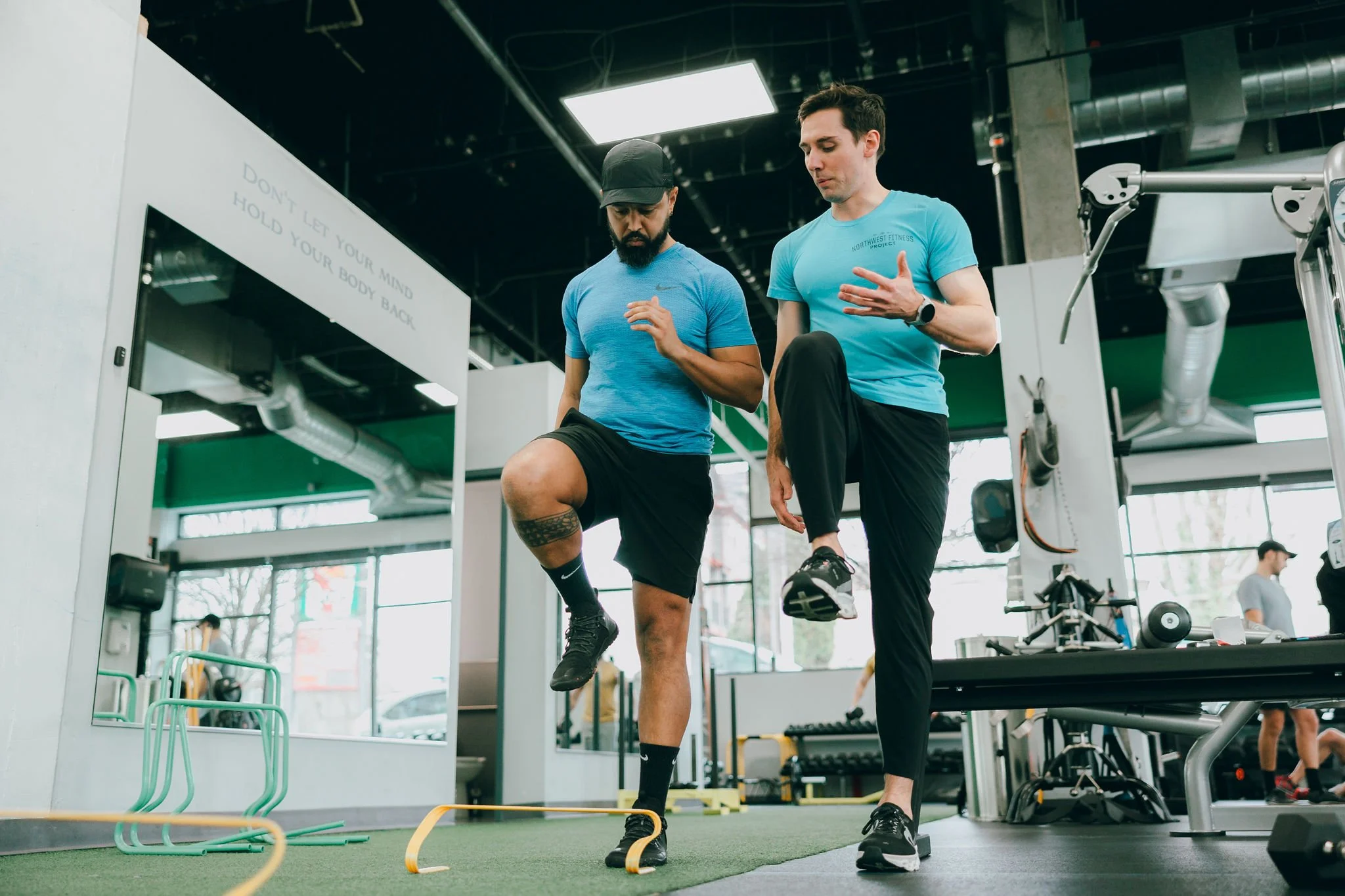
What Hybrid Training Looks Like at NW Fitness Project
Hybrid training isn’t just doing random lifts on random days. It’s a system - one we use every day with clients in our Seattle community. The following are the pillars that uplift the training philosophy of a well balanced hybrid athlete.
Pillar #1 - Lift Heavy Enough to Matter
Runners often default to light DB circuits or high-rep strength classes. Those have value, but to truly improve running economy and resilience, you need:
Heavy hinge patterns (trap bar deadlifts, RDLs)
Single-leg strength (split squats, step-ups)
Explosive power (KB swings, med ball work)
Trunk strength that actually carries over (anti-rotation, carries)
Pillar #2 - Structure the Week to Reduce Interference
This is where most people struggle. Training can quickly become overwhelming when you need to balance multiple running, and lifting days in parallel. How do you avoid excessive soreness? Can you stack a lift and a run on the same day? How much intensity should you bring in each session? These are all questions that we have plenty of experience with at NWFP.
A typical hybrid weeks often look like:
2–3 strength sessions (heavier early in the week, lighter near long runs)
2–4 runs (one quality session, one long run, optional easy mileage)
This keeps fatigue predictable so you can actually absorb training in the long term.
Pillar #3 - Build Around Your Life, Not Against It
You’re a human first. A runner second. We design hybrid plans that fit work, travel, stress cycles, and your energy availability - not the other way around. Consistency beats perfection every time.

Want to Train This Way? We’d Love to Guide You.
If you’re curious about hybrid training, want to run faster, get stronger, or simply enjoy training more - we can help you get there. You’ve got a couple options here at NWFP when it comes to the hybrid training approach:
Click below to set up a 30-minute conversation where we break down your current routine, your goals, and what hybrid training could look like for you.
Book Personal Training Consult (select Personal Training on dropdown)
Book Running Coaching (select Run Coaching on dropdown)
Let’s build strength, speed, and long-term durability - together.