
by Alec Bulat, co-owner & Director of Product
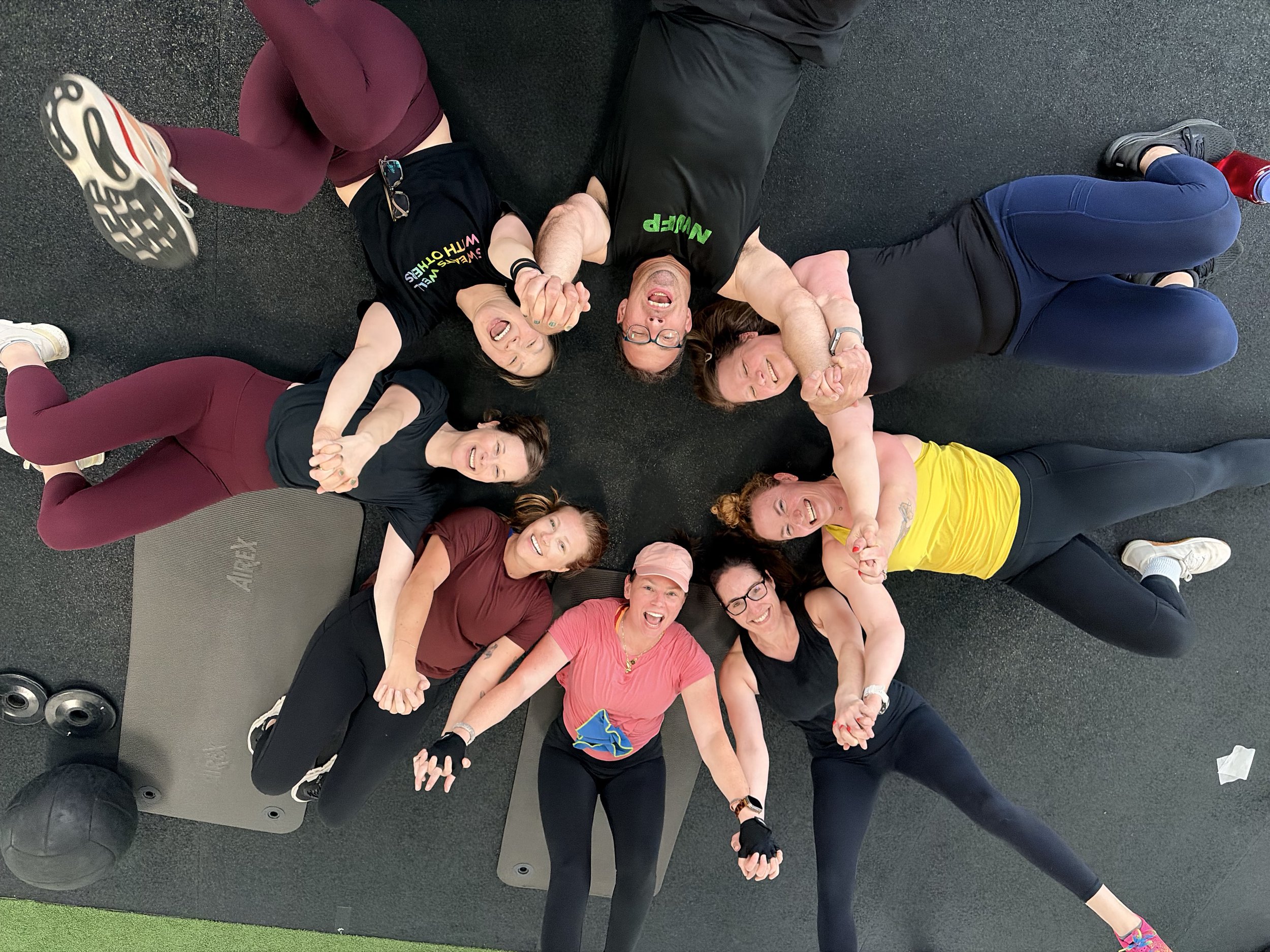
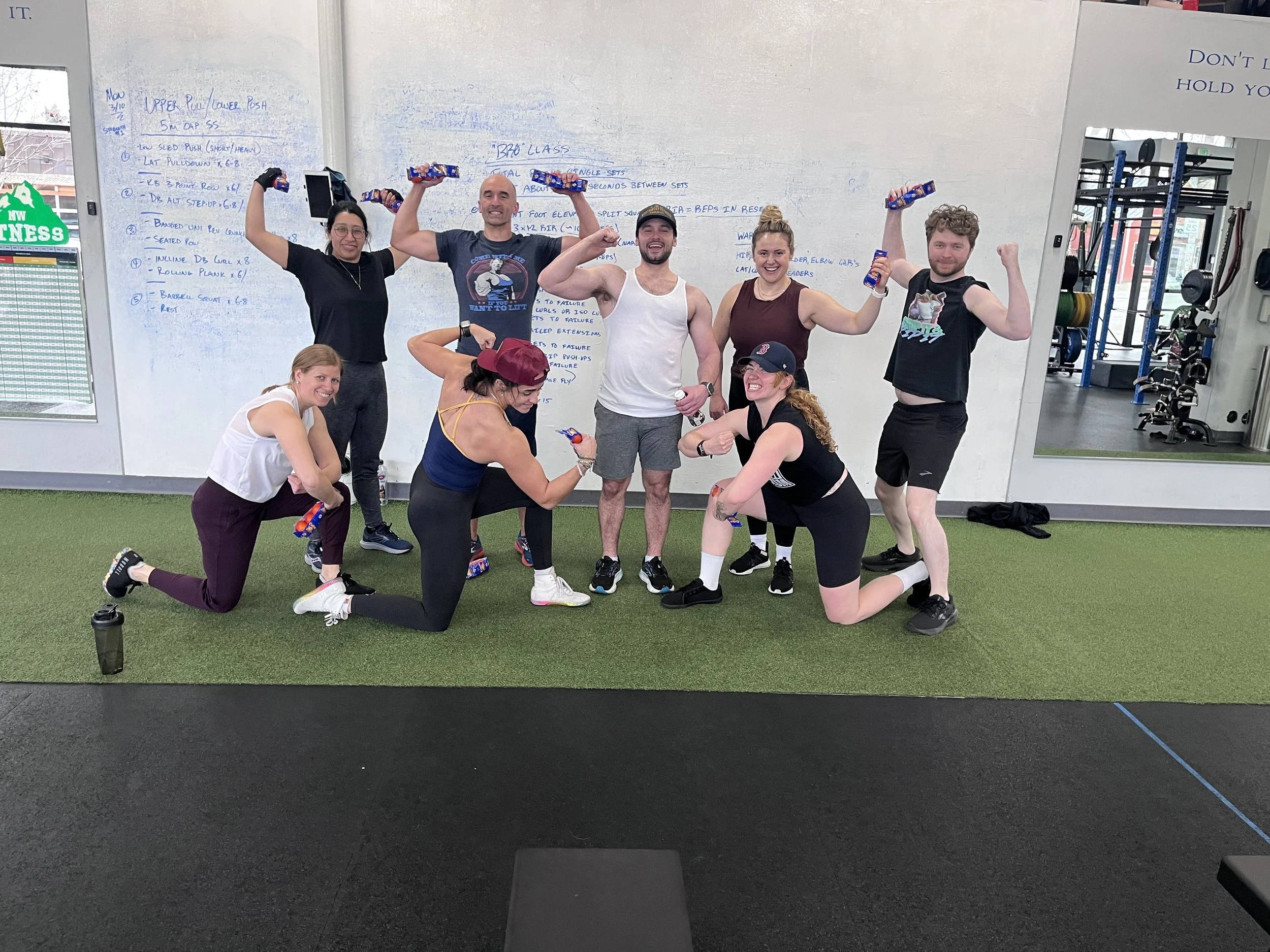
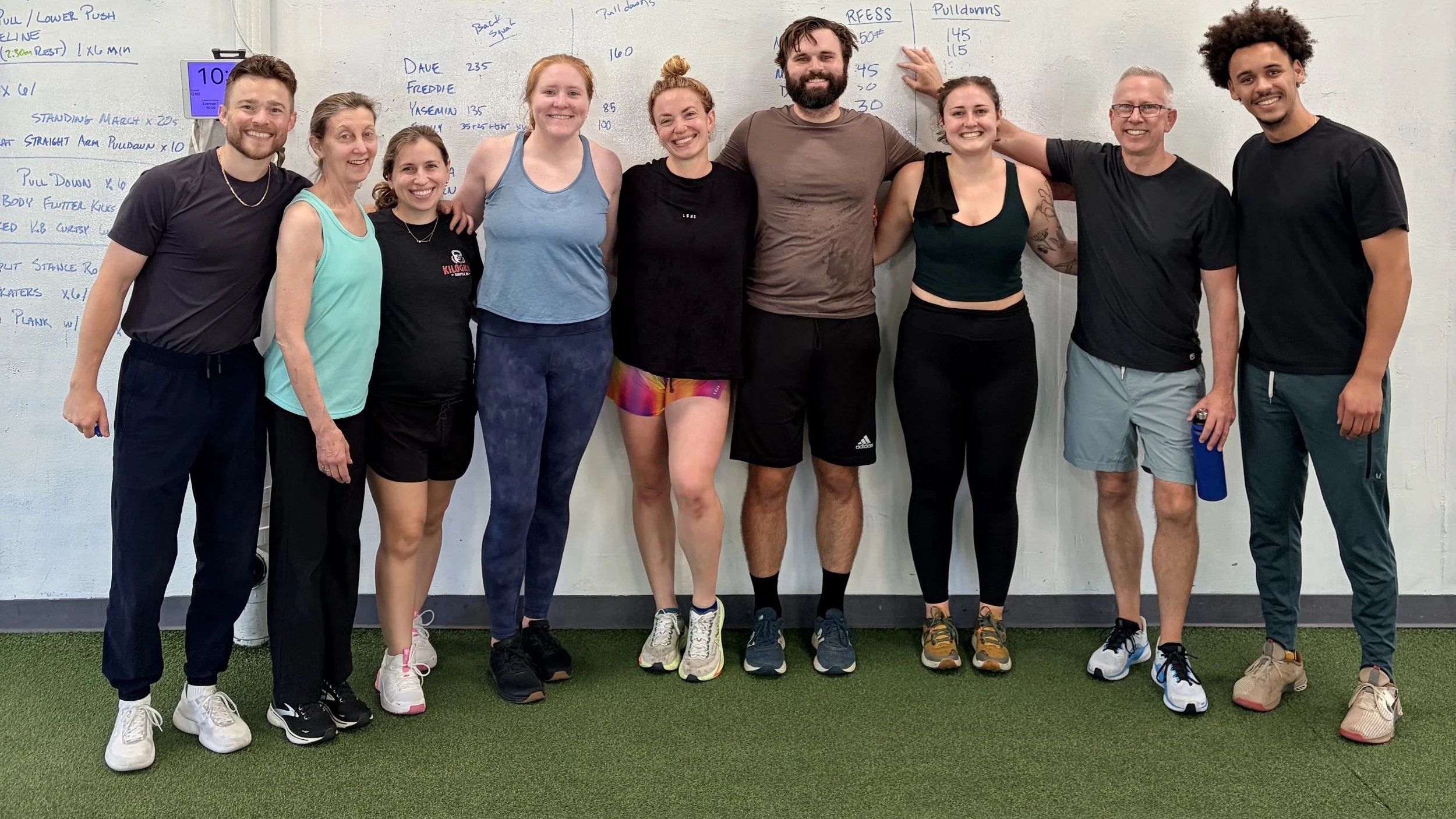
If you’ve done Sunday Cardio Strength in Fremont, you know the drill. 9:30am start, be there or be square. A few weeks ago I was standing on the floor at 10:30, lungs burning, sweat dripping onto the mat, and I noticed something small and kind of beautiful. Everyone was breathing hard. People were trading notes on which station wrecked them, which one felt easiest, and what helped them recover between rounds. And almost everyone was smiling.
I spend most of my week behind the scenes writing these workouts and refining the who, what, when, and why of how we program and coach. So naturally, I wanted to know: was the hard part the thing that brought us together? Why did I have so much fun while my lungs were on fire? Why was everyone grinning while describing the toughest part of the workout?
What the research says
As I usually do, I went reading. In 2014, psychologists Brock Bastian, Jolanda Jetten, and Laura Ferris published a study in Psychological Science that tested exactly this question. They put small groups of strangers through a series of tasks. One set of groups got the painful version, like reaching into ice water to pull metal balls off the bottom and holding a wall sit. The other groups got the painless version, like room-temperature water and a simple balance hold.
Afterward, both groups reported about the same levels of positive and negative emotion. The pain didn’t make anyone miserable. But the groups who went through the hard version together reported feeling significantly more bonded to each other, with stronger agreement on statements like “I feel part of this group of participants.” In a follow-up study, people who ate a very hot chili pepper together cooperated more in a group game than people who ate something mild.
The researchers’ conclusion: shared pain may work as a kind of social glue.
What that means for class
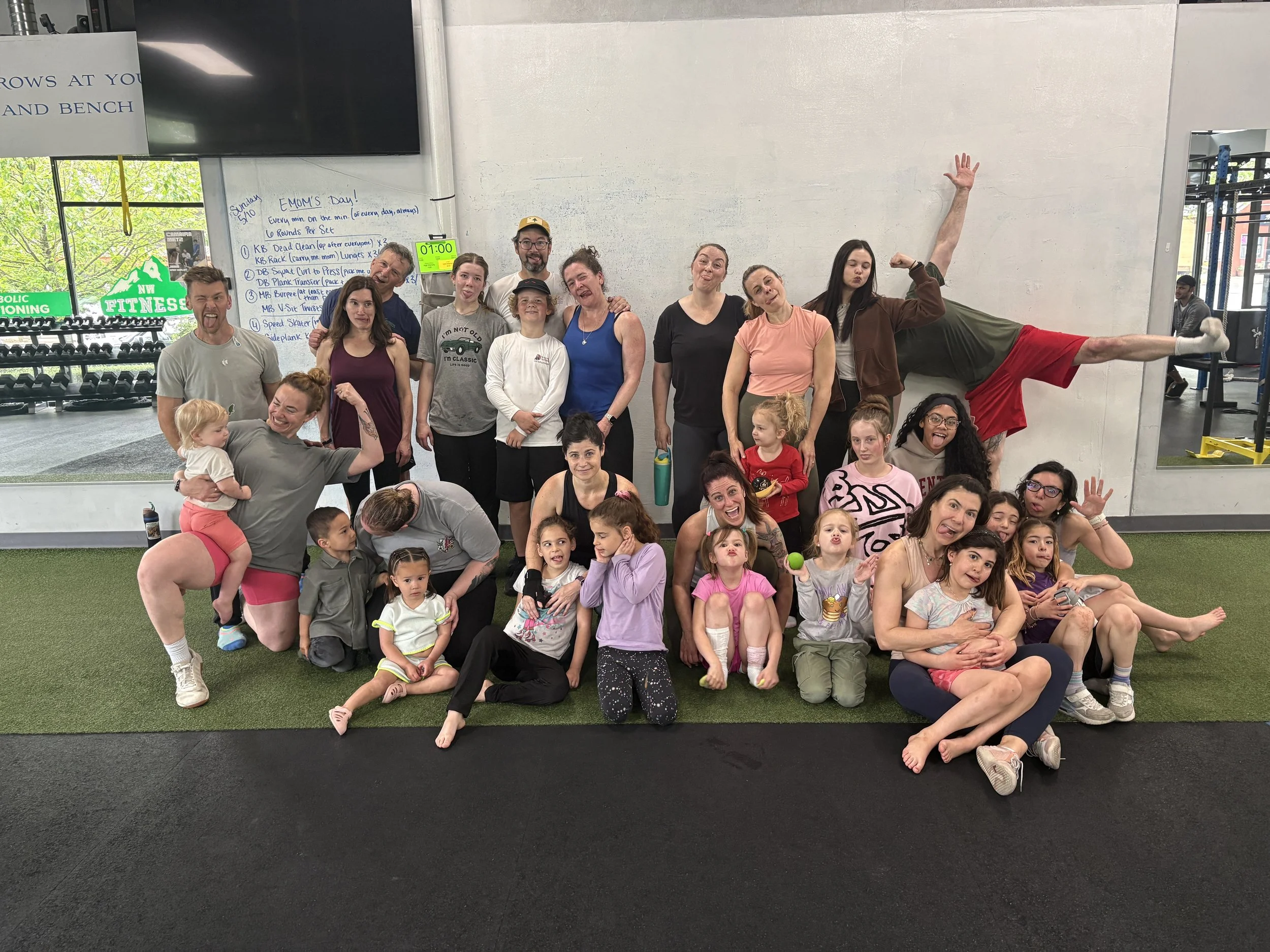
Let’s bring this back to our floor, especially the high-intensity days. Some of you have described Cardio Strength as “character building,” and I’ll take that as a compliment. But this research suggests the challenge is doing more than building fitness. It’s building community.
My guess is a few things are at work. The effort pulls your attention outward, toward the people beside you. And for 50 minutes, everyone in the room shares one goal: get through this, together. That’s a big part of why our small groups feel close, even when people can’t quite explain why.
When we asked our community what keeps them coming back in our recent Client Experience Survey, you said it better than I can:
“I need the social distraction of working out with a group led by a trainer.”
“Small classes, specialized instruction. The classes have all age groups and abilities which made me comfortable to work with the coaches.”
“I enjoy the small group classes; it’s easy to show up, be told what to do (so I don’t have to think about it), get it done, and move on with my day.”
And my personal favorite, in four words: “Meeting my group friends.”
Your hard, my hard, our hard
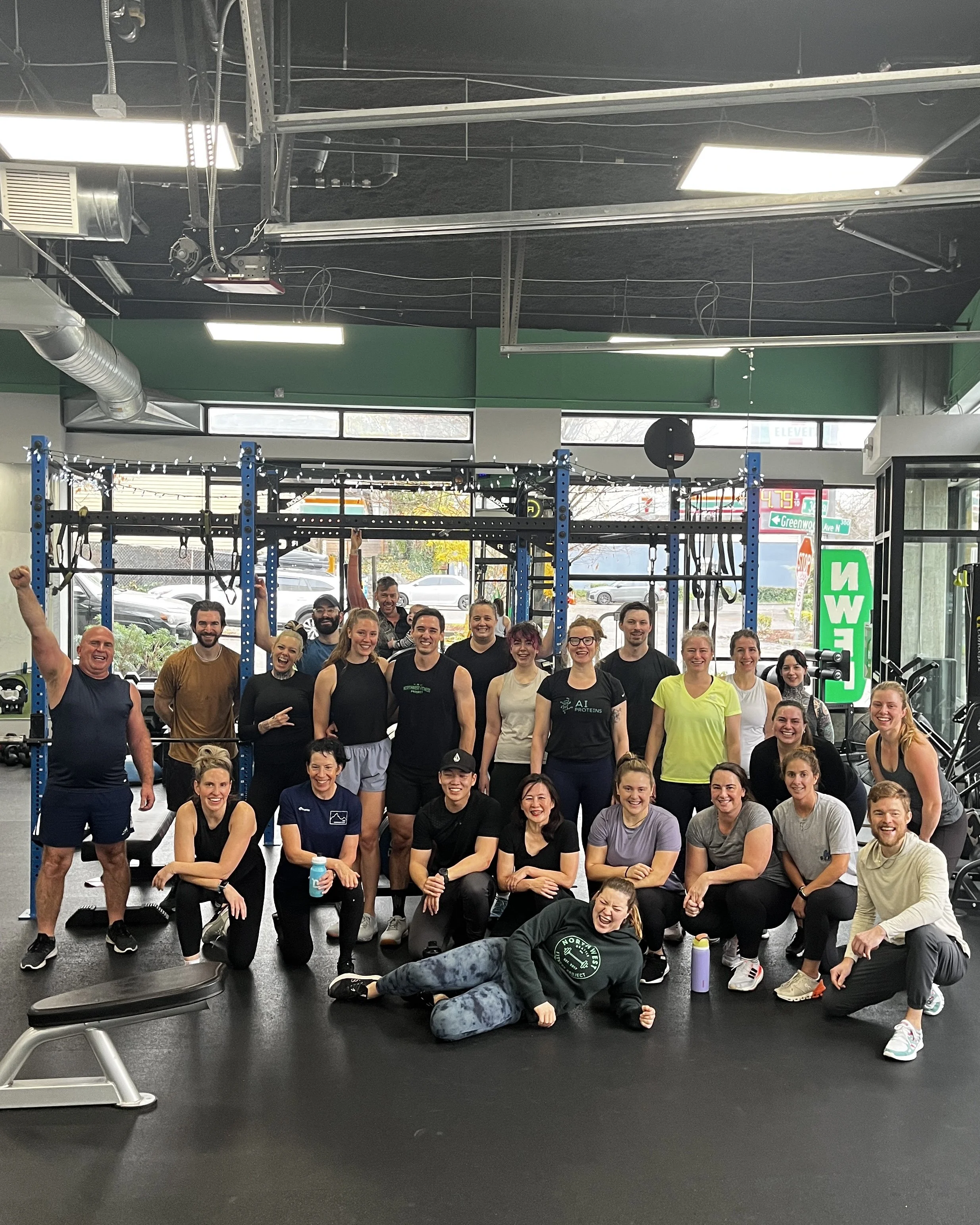
Hard doesn’t look the same for everyone, and it shouldn’t. Inclusive Community is one of our core values, and on the floor it means every workout is built to scale. Your coach is there to adjust the load or the movement so the challenge fits where you are today, for any elevation from sea level to summit. The bond doesn’t come from everyone doing the same thing. It comes from doing your version of hard next to someone doing theirs.
That also means our classes ask a lot of you socially. You’ll share stations, swap equipment, and talk to people you’ve never met. If you’ve lived in Seattle for more than a week, you know that’s not exactly our default setting. The Seattle Freeze is real, and the first few classes can feel a little awkward.
And sometimes it’s more than awkward. Your partner is faster than you on the rower, or slower on the bench press. You stop to adjust the barbell height between turns and get two sets in instead of three before the timer goes off. That’s not the class going wrong. That’s the class working. You’re training together, not just in the same room.
We want the high fives. We want you to help each other out. We want to be mildly inconvenienced by each other, because that’s the same closeness that keeps us inspired, holds us accountable, pushes us when we need it, and every so often lets us be completely surprised by the person next to us.
So the next time you’re catching your breath and comparing notes with your training partner about the easiest and toughest stations, even if you just met, know that something is happening there. An unspoken bond that’s yours to keep. Stay sweaty, everyone. You might just leave with a lifelong friend.
You’re in strong company.
References
Bastian, B., Jetten, J., & Ferris, L. J. (2014). Pain as social glue: Shared pain increases cooperation. Psychological Science, 25(11), 2079–2085. doi:10.1177/0956797614545886
Association for Psychological Science. (2014, September 9). Shared pain brings people together. psychologicalscience.org
