
From a Quarter Mile to a Double Black
Four Months After Spinal Fusion: The Long Way Back to the Mountains
by Matt Holland, co-founder & owner
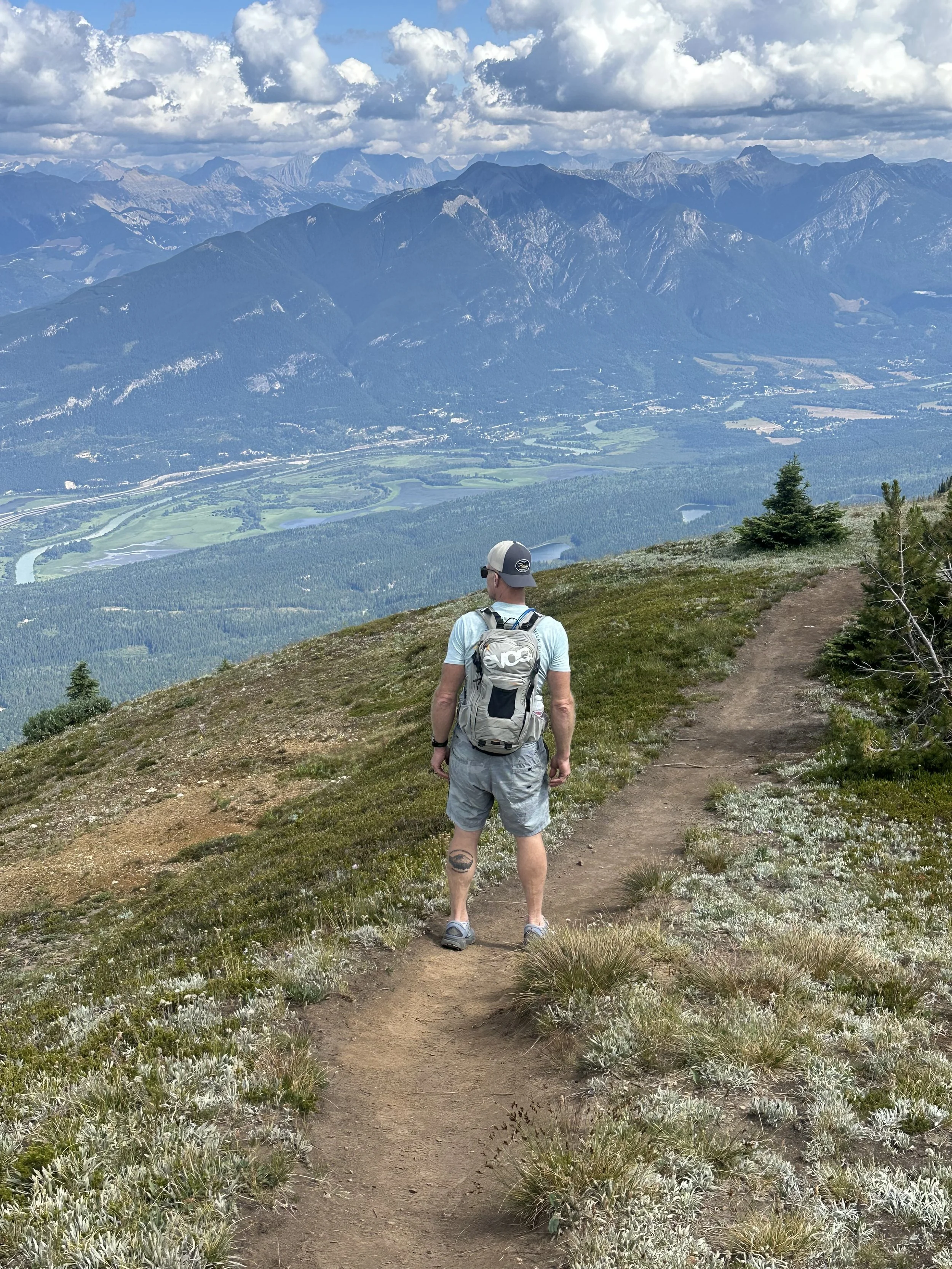
In May, I had an L5-S1 spinal fusion. In September, I rode black diamond trails in Whistler, a double black in Pemberton, and stood among more than 40,000 mountain bike fans watching the Downhill World Cup. Between those moments were short walks, patient training sessions, a setback, and plenty of uncertainty that a highlight reel can't show.
I booked the Whistler trip before surgery. Once I knew surgery was coming, I had no idea whether I'd be riding by the time the trip came around, and if I was, I figured I'd be pretty limited. So being there four months later, feeling strong and in control on my bike, meant more to me than I can really explain.
Why I had surgery
My back issue had been building since the previous summer. At its worst, I couldn't stand for more than 10 minutes or walk more than a quarter mile without significant pain. I had a collapsed L5-S1 disc, degenerative changes, stenosis, bone spurs, and symptoms running down my leg, including shin pain and tingling.
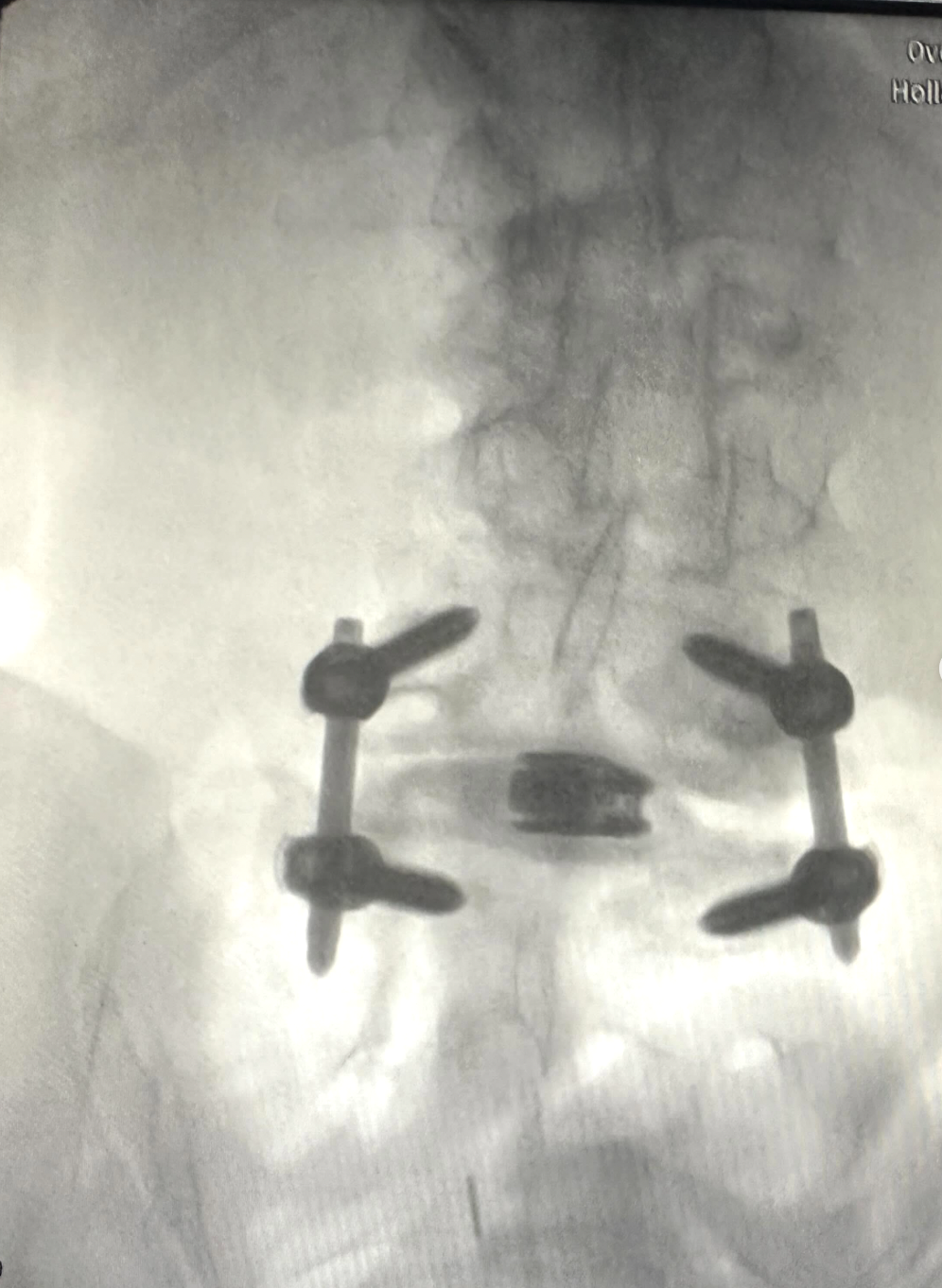
I tried everything I could to find a way forward without surgery. My symptoms even improved enough that I postponed an earlier surgery date. But as I returned to more activity, the limitations came back. On May 19, I had an L5-S1 spinal fusion.
I've lived with Crohn's disease for over two decades and have been through a long list of surgeries and injuries. You might think that would make another operation easier. It didn't. This was going to be a different kind of recovery. Training and being outdoors are a huge part of my life and who I am, and the possibility that I might not get back to them the same way was scary. There were anxious moments, and some dark ones too.
One thing I did have going for me was the shape I was in before surgery. I went in with years of strength and endurance training behind me. I still had to heal and put in the work afterward, but I believe that foundation is a big part of why I was able to make progress as quickly as I did.
Starting with a quarter mile
Early recovery was humbling. My first goal wasn't a big hike or a heavy lift. It was walking, sometimes just a quarter mile, and seeing how I felt afterward. I built that distance gradually. Some days progress was obvious. Other days were about doing the small things again and trusting they would add up.
At four weeks, riding the Peloton became a staple in my routine. Around six weeks, I started lifting again with gentle exercises that didn't ask too much of my spine, and I could push a little harder on the bike. I trained areas I'd often neglected and chose movements that kept me from constantly comparing my numbers to what I could do before. I added a hike each week, built the mileage and climbing as my body allowed, then brought in mellow outdoor rides to get used to the vibration and feel of being on the bike again.
That work wasn't flashy. It meant paying attention, adjusting, and resisting the urge to turn one good day into a giant leap. At my three-month follow-up, my surgeon was pleased with how the fusion looked and how far I'd come. He cleared me to return to activity as tolerated, as long as I avoided hard falls. I was thrilled, but I still had to build the strength and confidence to do the things I loved.
The Rockies, with Ariel
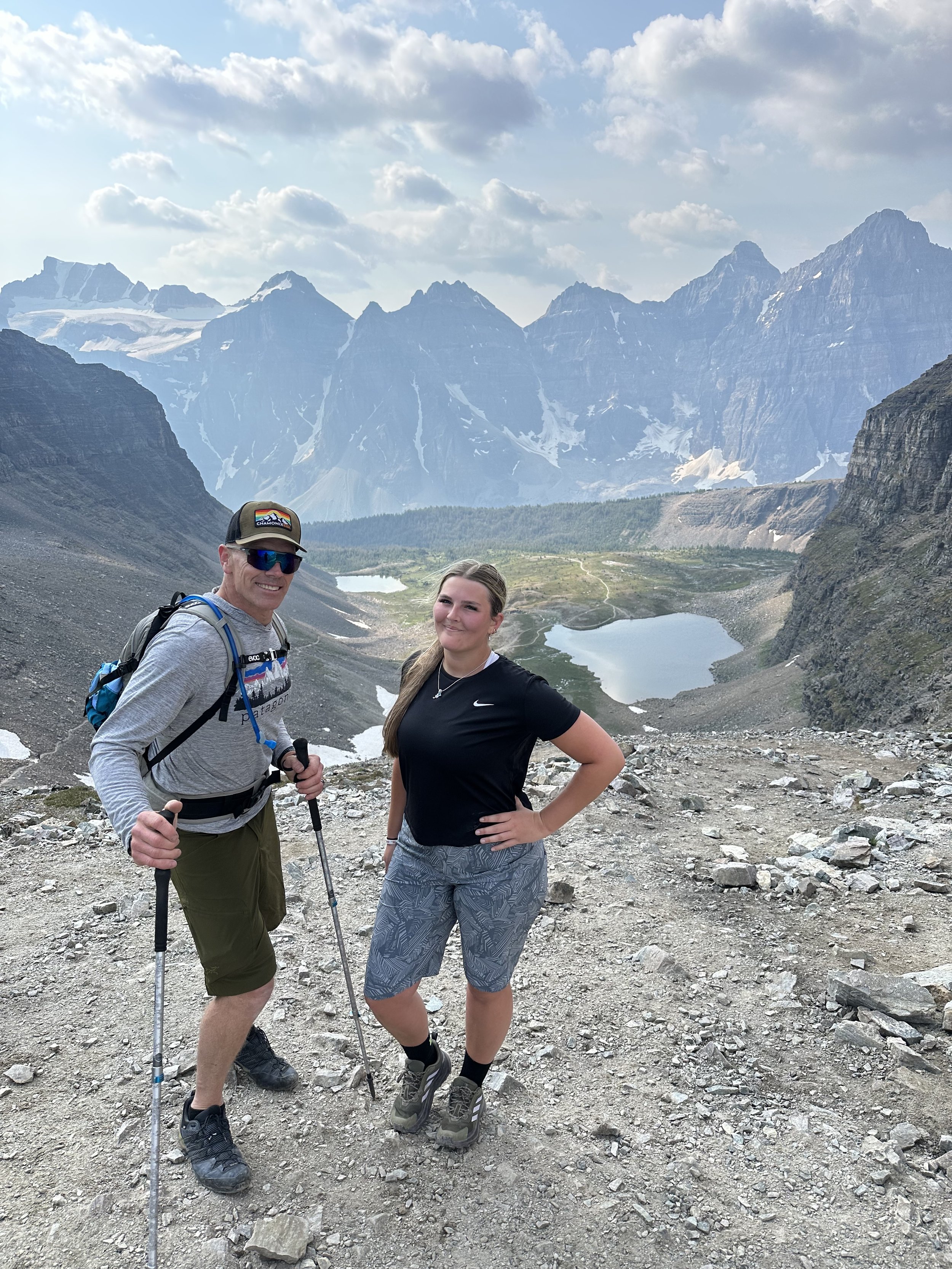
The first big payoff came in August, on a trip to the Canadian Rockies with my daughter, Ariel, before she headed off to college. When I booked it, I figured my activity would be pretty limited and planned the trip with that in mind. Then I surprised myself, and we slowly ratcheted up what we did as my body tolerated it.
We hiked at Kicking Horse and around Emerald Lake, spent time at Lake Louise, and took on the more demanding hike up Sentinel Pass above Moraine Lake with a pack on. Three months earlier, I had been measuring walks in fractions of a mile. Now I was in the mountains with my kid, doing exactly the kind of trip I'd been working toward.
The second half took us mountain biking around Banff and Canmore. We found a ridgeline trail with a swing that carried you out over the edge, then headed toward Jasper along the Icefields Parkway, stopping to hike and take in the scenery. I even jogged down a trail near the glacier without pain. Those were incredible moments, but the best part was sharing them with Ariel. That trip gave purpose to all the quieter weeks of recovery.
Progress has bumps
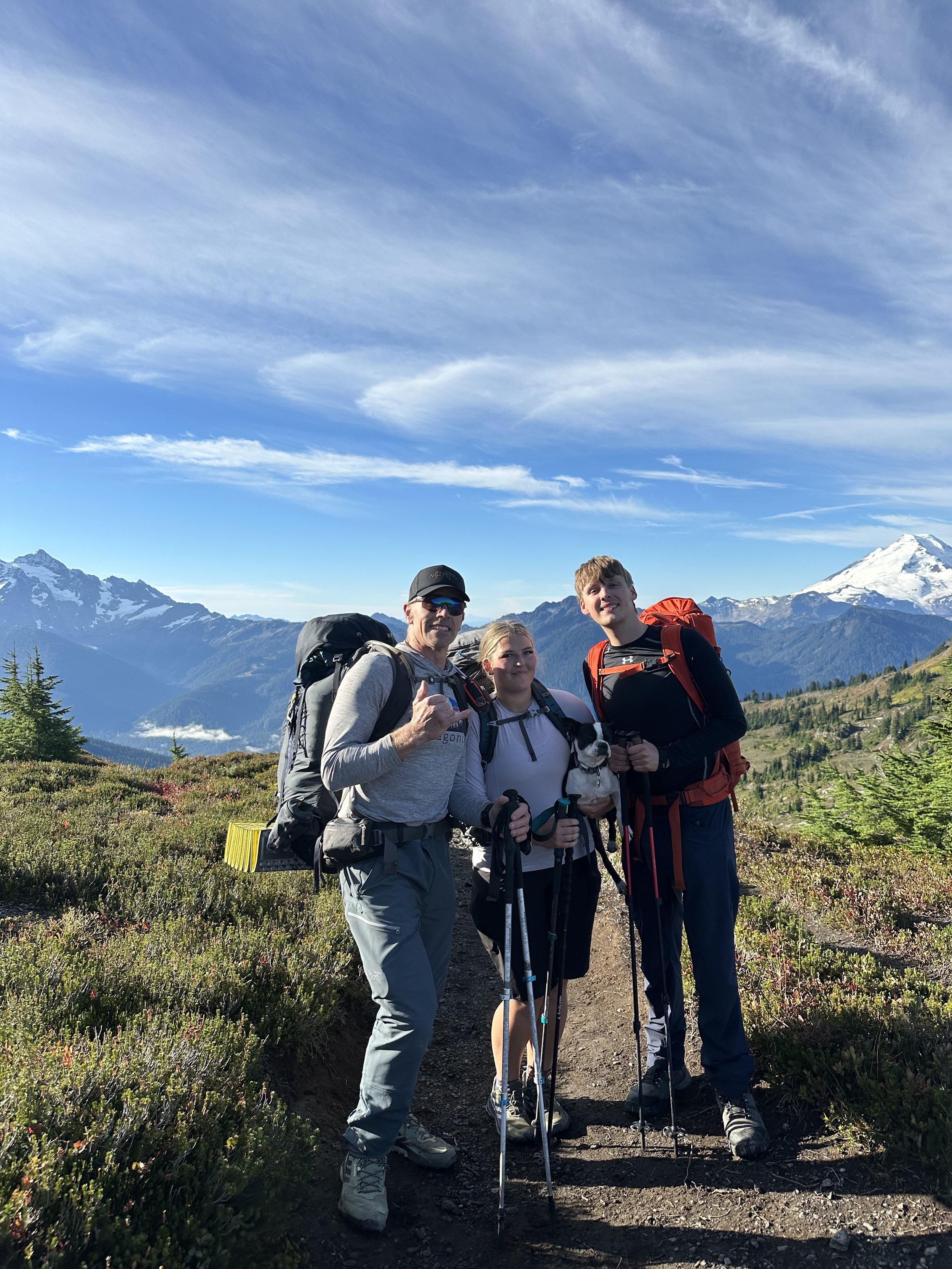
There was one more adventure I hoped to share with Ariel before she left: a backpacking trip to Yellow Aster Butte with her and her boyfriend. That meant carrying a 35-pound pack for about nine miles with 3,500 feet of elevation gain. It was such a good experience, and I felt amazing out there.
After we got back, though, I felt soreness in my lower back and glute for the first time in a while. A few movements that had felt fine two weeks earlier suddenly bothered me. I worried I'd pushed too hard, so I went back to see my surgeon. He looked at new X-rays, said the fusion looked fine, and reassured me I was headed in the right direction. His take was that I'd found my current ceiling.
The symptoms started improving, but it was a reminder that feeling great on a trip doesn't guarantee feeling great the following week. Running, jumping, and other higher-impact work can still feel jarring. I'm still figuring out what will improve as I rebuild and what I may need to manage differently. That's the honest version of four months out: I've made a lot of progress, and I'm still recovering.
Back on the bike in Whistler
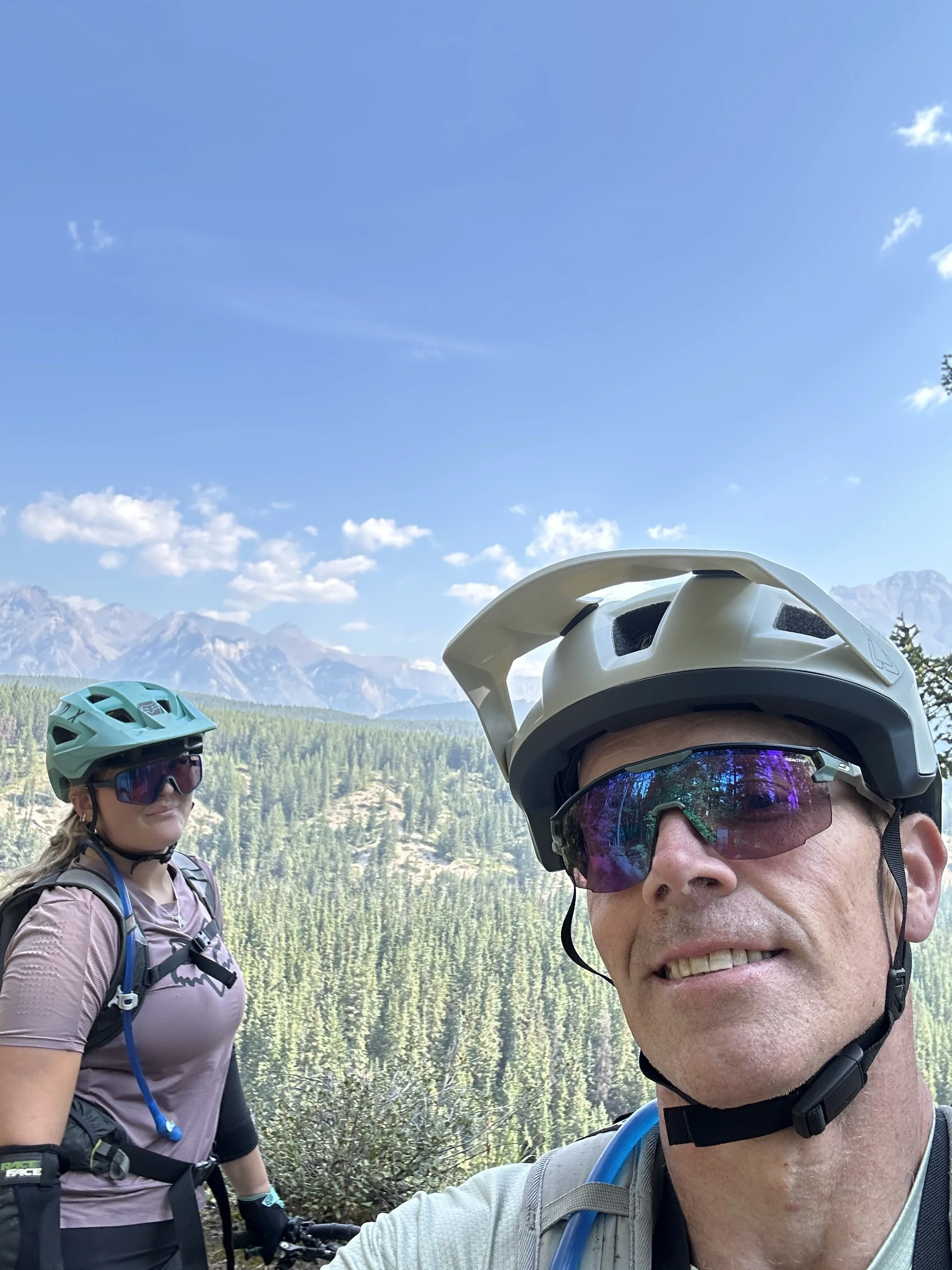
Then came the trip I'd booked before surgery. I'd expected to be pretty limited, and Whistler riding is no joke. On the way up, I stopped in Squamish to ride some favorite trails. Friday at the Whistler bike park was rainy, muddy, and soggy, but we made the most of the empty lift lines, which turned out to be a good call since Saturday's lines reportedly ran over an hour. On Saturday we rode local favorites Howler and Sabertooth Kitten, two spicy black diamond trails, and watched the World Cup qualifiers.
On Sunday, before heading back to the races, we drove north to Pemberton and stepped things up on a BC double black diamond. Somewhere on that ride, it dawned on me that I hadn't ridden at this level since before surgery. After four consecutive days of aggressive riding, I still felt solid, in control, and less fatigued than I'd expected. The months of walking, focused strength and core work, hiking, and carefully returning to the bike were showing up right when I needed them.
Then we joined the crowd for the Downhill World Cup. The energy of seeing those riders and that many fans together was unreal. I went for the racing, but I left thinking about everything it had taken just to be there on my bike.
What this has reinforced for me as a coach
At NW Fitness Project, we talk about meeting the person in front of us and adapting the program to what they need. This recovery made that very personal. Some weeks the right training was a short walk. Later it was a different lift, a longer hike, or a trail ride with the difficulty turned up a little. When I had a flare, I reassessed and kept building.
It also reinforced one of the biggest reasons I believe in training: you don't know when life will ask you to draw on the strength you've built. Going into surgery in great shape gave me a foundation to work from when I found myself at the bottom of a pretty deep hole. It didn't make recovery easy, but it gave me more to work with as I climbed back out.
I can't pretend every recovery follows this timeline, and I still have work to do. But I know what helped me: that foundation, starting where I actually was, staying consistent, building capacity in small steps, and keeping the things I love in view. Four months ago, a quarter-mile walk mattered. Today, so does a double black in Pemberton. Both belong to the same story.
I'm grateful to my family for always supporting me, especially Ariel for sharing these trips with me, to Stephanie at Rise Performance & Health for helping guide my rehab, and to everyone who checked in along the way. I have more rebuilding ahead. For now, getting back to the mountains and to the bike feels pretty damn good.
If you're on a similar path
Maybe you're coming back from surgery or an injury. Maybe you have a procedure on the calendar and you're wondering what the other side looks like, or you've lived with pain long enough that you've started planning your life around it. I know that place. I also know how hard it is to walk into a gym when you're not sure what your body can handle.
That's the kind of training we're built for. Our coaches start with where you are today, not where you were before or where you think you should be. We work alongside your surgeon or physical therapist, build around what you've been cleared to do, and adjust week to week as your body shows us what it's ready for. Personal training is usually the best place to start, and we'd love to work with you at either our Fremont or West Seattle studio.
If any part of my story sounds like yours, reach out and tell us where you are and where you want to be. We'll figure out the first step together. We create the map. The ascent is yours.
