
by Matt Holland, co-founder & owner
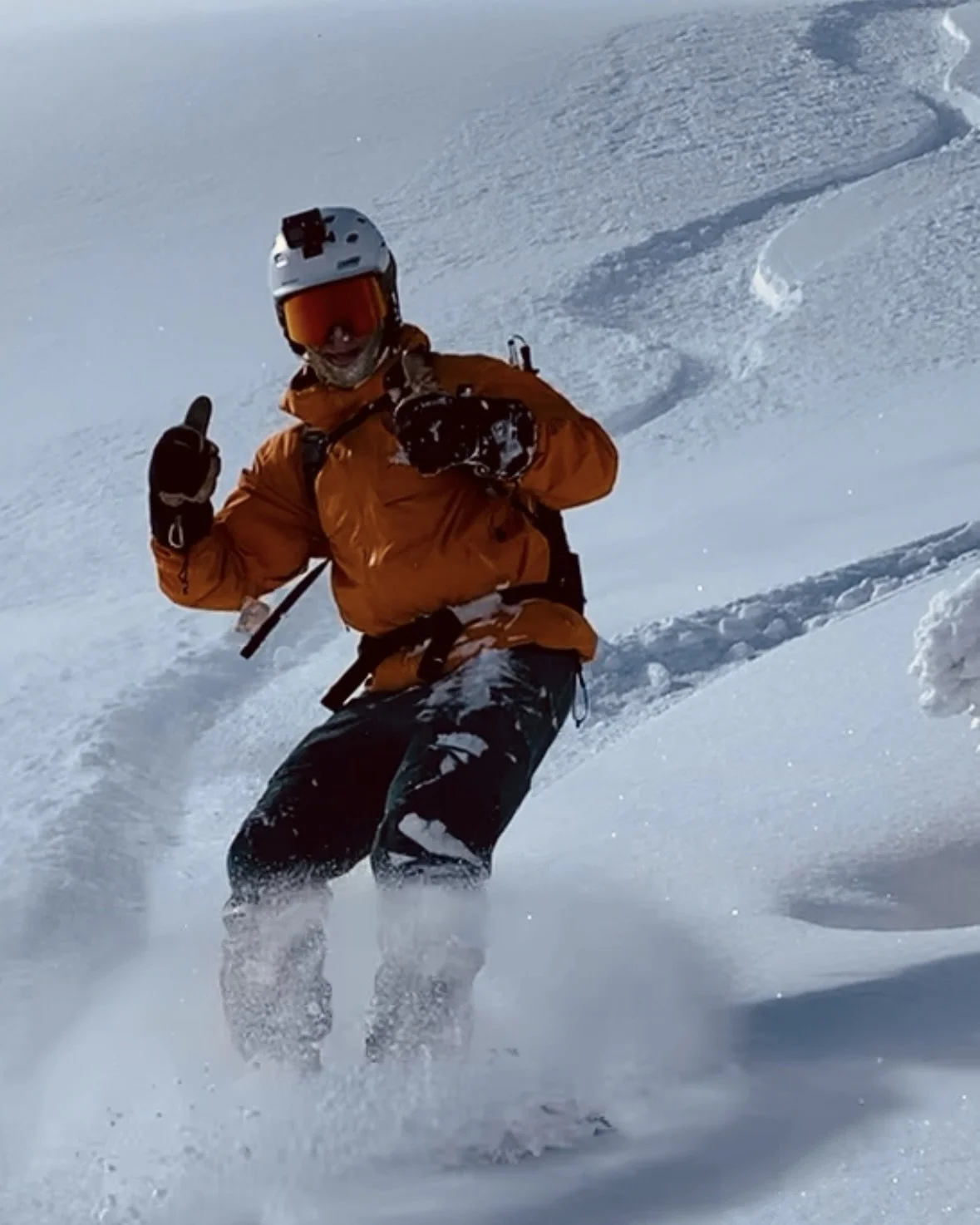
The climb earns the turns. Make sure you've got legs left to enjoy them.
I coach strength for a living, and I spend as much of my winter as I can in the mountains. I want the work I put in at the studio to show up on the skin track and on the way down. For skiing, snowboarding, and splitboarding, that means building strength, endurance, and control, especially for that point late in the day when your legs start getting cooked.
Whether you're hiking for fresh lines, spending hours on the skin track, or stacking laps at the resort, winter asks a lot of your body. You're absorbing terrain, adjusting your stance, and managing your effort for hours at a time. A few weeks of focused preparation make a real difference in how those days feel, and in how you feel the morning after.
Here are five movements I build into my own winter training, why they matter, and how to get the most out of them.
The short version: The five strength exercises worth building into your winter prep are weighted step-ups, rear-foot elevated split squats, Romanian deadlifts, lateral lunges, and hanging knee raises. Do them before your cardio, control the lowering on every rep, and pair them with conditioning in the weeks before opening day.
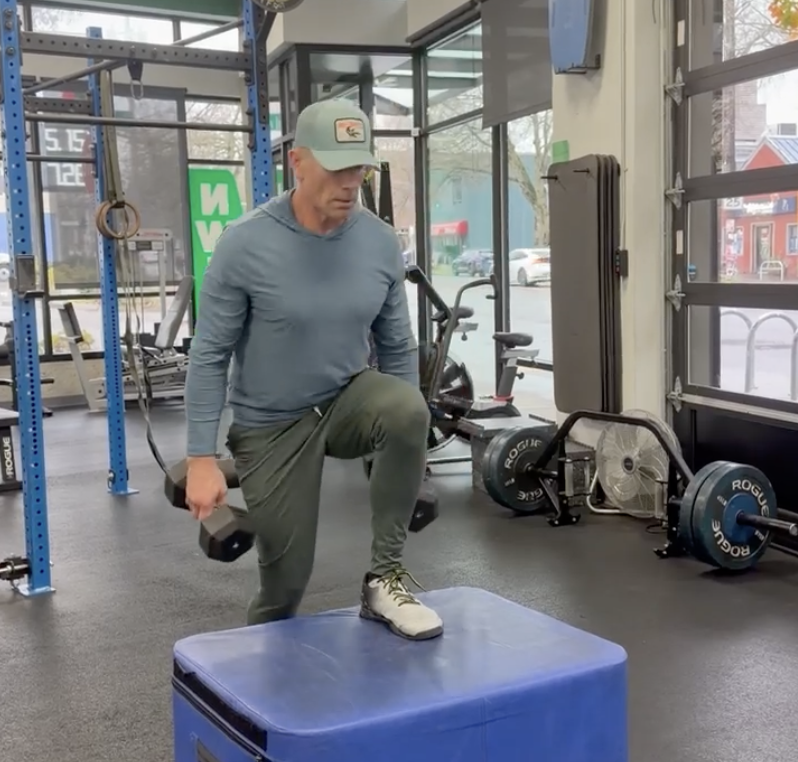
1. Weighted Step-Up
Strength for the climb and the turns.
The skin track is thousands of repeated steps. If you tour, you already know the uphill is most of the day, and weighted step-ups are one of the most direct ways to train for it.
You don't have to tour to benefit, though. Skiing and riding mean shifting pressure from leg to leg and absorbing whatever the terrain throws at you. Step-ups train each leg on its own, and a controlled step down teaches you to manage your body weight as your hip and knee bend. That's what your legs are doing in the chopped-up snow on your last run of the day.
Pick a box height that lets you place your whole foot on top and stand up without pushing off your trailing leg. Drive through the working leg, stand tall, and lower yourself back down with control. The lowering matters. Don't let every rep end in a drop to the floor.
Coaching cue: Pick a height and a weight you can own. A taller box doesn't automatically make it a better exercise.
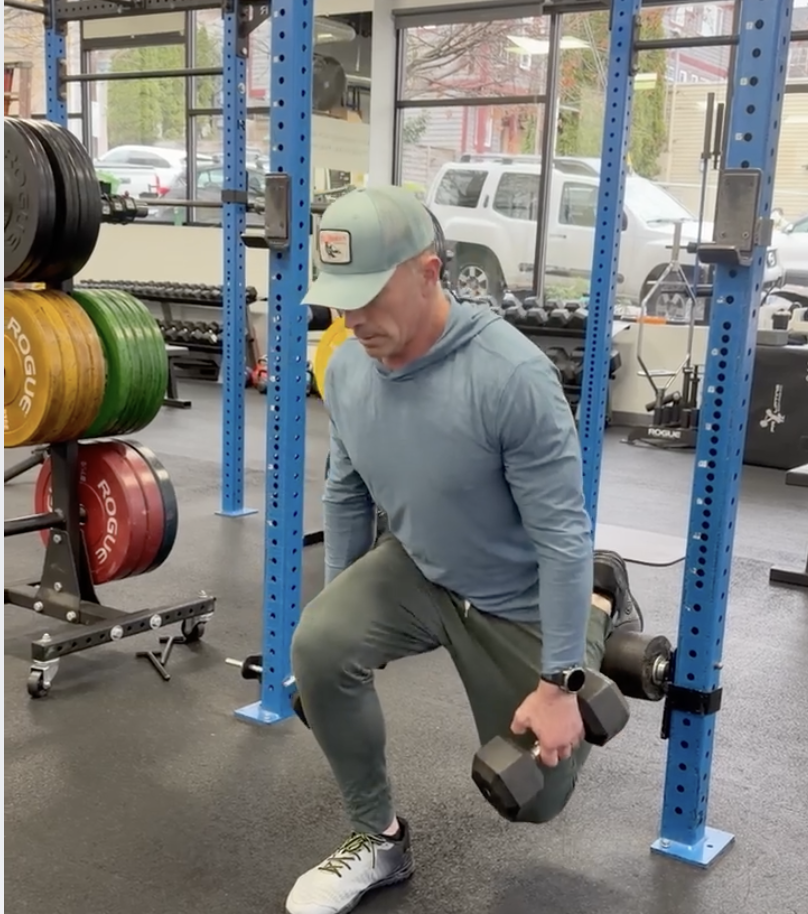
2. Rear-Foot Elevated Split Squat
Single-leg strength for shifting your weight through every turn.
Even with both feet locked into skis or a board, your legs rarely share the work evenly. Every turn and every change in terrain moves the pressure around.
This one works each leg on its own and builds strength through the quads and glutes. It also makes it much harder for your stronger side to quietly take over, which most of us do more than we realize.
Set your rear foot on a stable bench or box and place your front foot so you can lower comfortably. Keep that front foot planted and work through a range you can control. If balance is getting in the way of working the leg, hold onto a rack for support, or start with a regular split squat before you raise the back foot.
Coaching cue: Own the bottom position before you chase heavier weight.
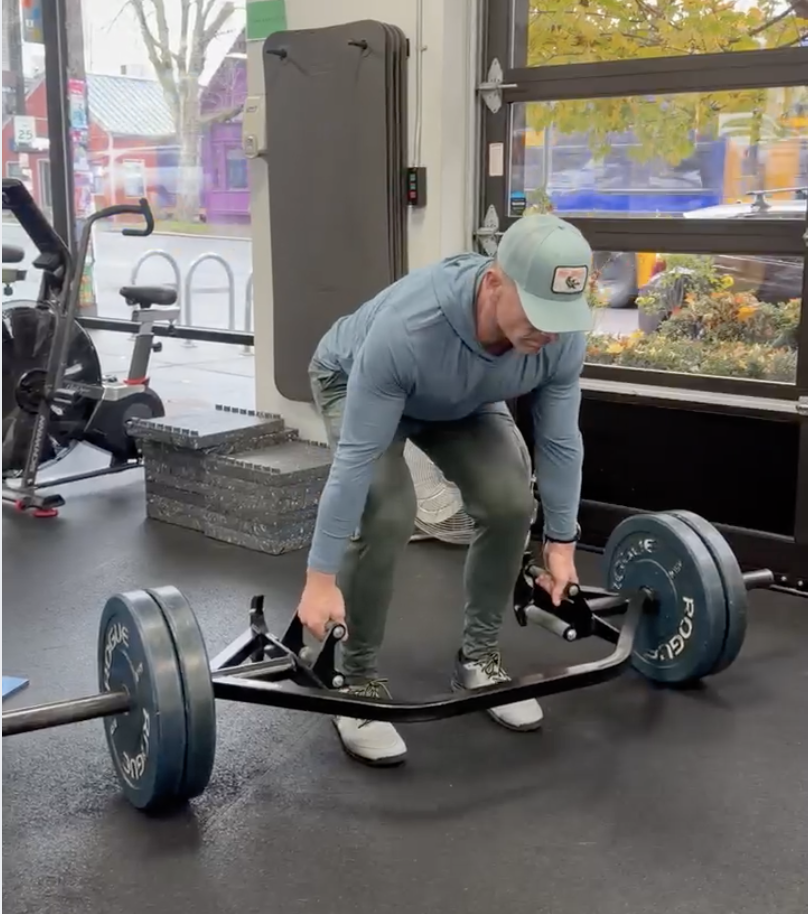
3. Romanian Deadlift
Hamstrings and glutes for when heavy snow tries to throw you into the backseat.
Winter training tends to turn into a whole lot of quad work. The back of your legs deserves attention too.
Romanian deadlifts build strength through the hamstrings and glutes and teach you to control movement from your hips. That's the foundation for holding an athletic stance when the snow gets heavy or the pitch gets steep.
Start with a slight bend in your knees, then push your hips back while keeping the weight close to your legs. Lower only as far as you can hold a solid position, then drive through your feet to stand. This isn't about touching the floor. Your range should come from your hips, not from rounding your lower back to find extra depth.
Coaching cue: Hips back, weight close, finish tall.
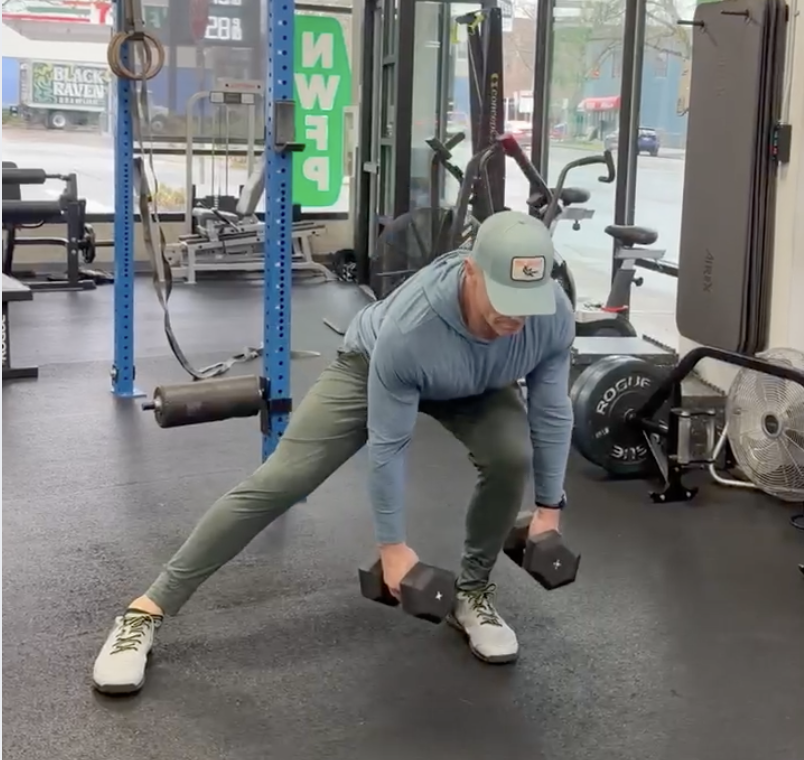
4. Lateral Lunge
Riding moves side to side. Your training should too.
Squats, hinges, and step-ups are all valuable, but they mostly happen in a forward-and-back pattern. The mountain doesn't work that way.
Lateral lunges build strength and control as you shift your weight sideways, loading one leg while the other stays long. Step out to the side, sit your hips back into the working leg, and keep that foot grounded. Push through the bent leg to come back to standing.
Start with a step width and depth that feel comfortable, and give yourself time to build control before you reach for a heavy dumbbell.
Coaching cue: Make the weight shift deliberate. Don't just take a wide step and bounce out of it.
5. Hanging Knee Raise
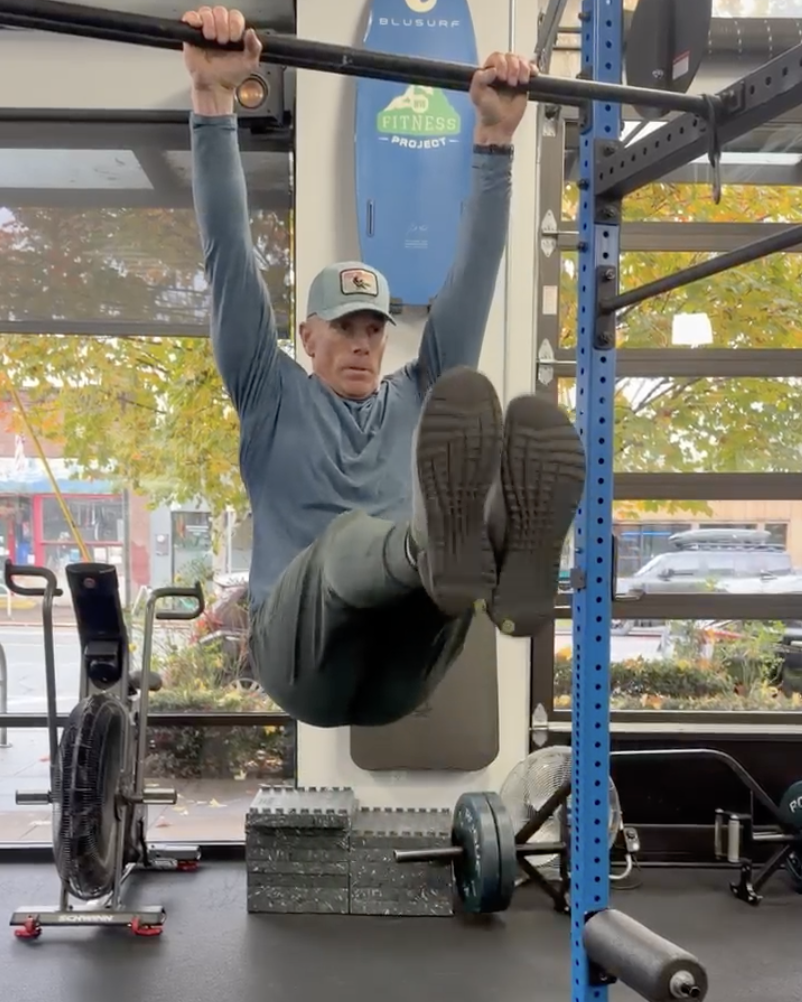
Strength for uphill strides and pulling your knees up in the air.
Your hip flexors lift the ski or splitboard with every uphill stride and kick turn. Hanging knee raises give those muscles, and your trunk, some focused work.
They help at the resort too. When you catch air, your legs create the drive at takeoff, and your hip flexors and abs help pull your knees up and control the tuck once you're airborne.
The key is control. Lift your knees without swinging, then lower slowly enough that you start the next rep from a steady position. If hanging is uncomfortable or your grip gives out first, swap in a supported knee raise or a controlled standing band march.
Coaching cue: Make your muscles do the work. Swinging through reps misses the point.
Make the Strength Work Count
When building strength is the priority, do it before your hard cardio so you can give it your best effort and attention.
Don't rush the lowering part of your lifts, either. Controlling the descent builds strength while you resist the load, which is exactly what you're doing every time you absorb terrain on the way down. That doesn't mean every rep needs to be painfully slow. It means the weight shouldn't be deciding how fast you move.
And keep a few key exercises in your program long enough to actually get better at them. Progress can look like more weight, another rep, a bigger range of motion you can control, or better control with the same load. All of it counts.
Build the Engine, Too
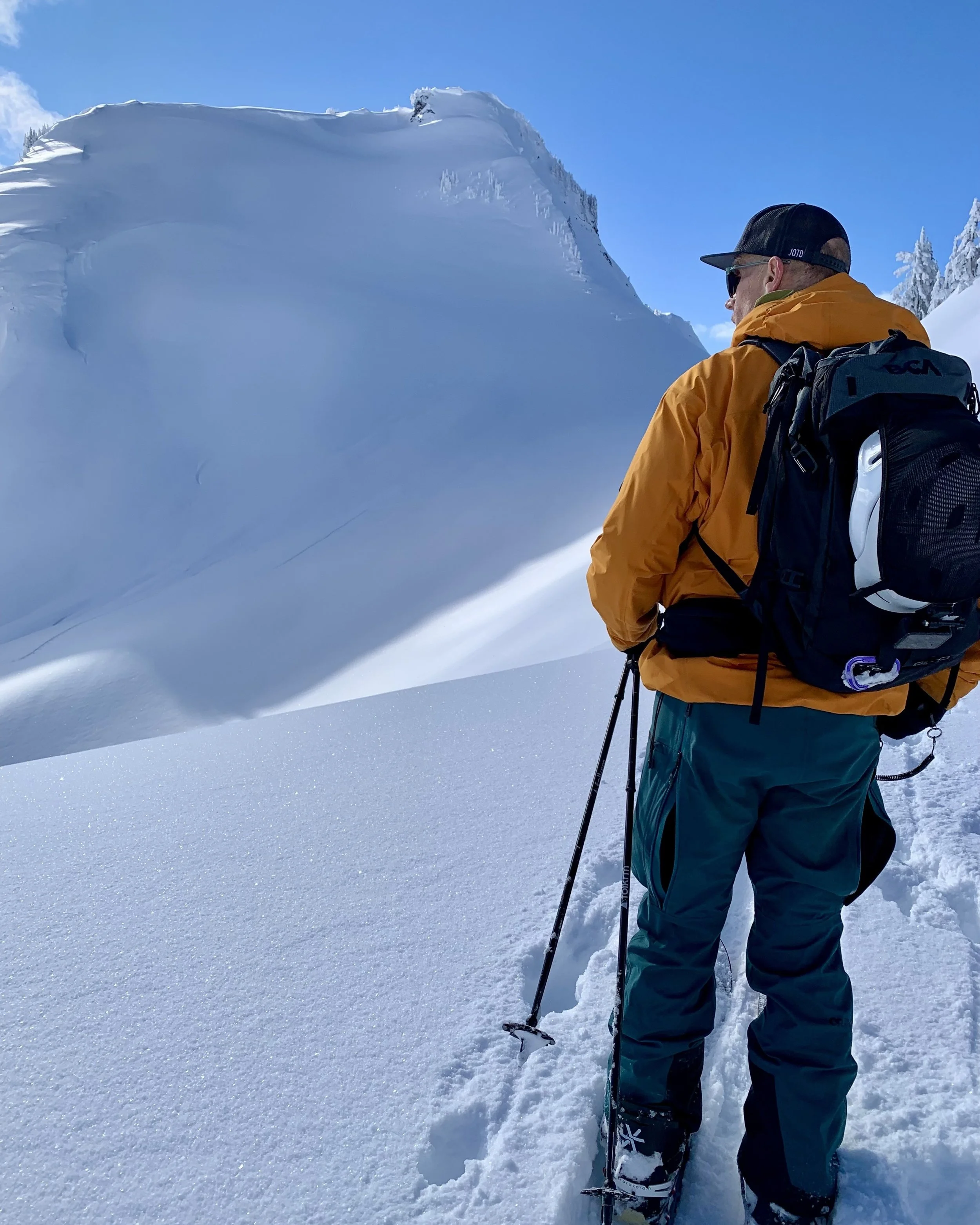
These five exercises are a strong foundation, but they aren't the whole plan. Long mountain days take conditioning, so build your capacity for sustained effort alongside your lifting, and work up gradually to the length and demands of the days you want to have.
If you tour, that means getting comfortable with longer uphill efforts while carrying your pack. If you mostly ride lifts, you still want the fitness to recover between runs and keep going all day.
Give yourself time to build both. One brutal leg day the week before opening day won't replace weeks of consistent training.
FAQ
What are the best strength exercises to prepare for ski season?
Weighted step-ups, rear-foot elevated split squats, Romanian deadlifts, lateral lunges, and hanging knee raises. Together they build single-leg strength, hamstring and glute strength, side-to-side control, and the hip flexor strength you use on uphill strides and in the air.
When should I start training for ski season?
A few weeks before your first day on the mountain. Consistency matters more than intensity. One hard leg workout the week before opening day won't replace weeks of steady training.
Should I do strength training or cardio first?
When building strength is the priority, lift first so you can give it your full effort and attention, then do your conditioning.
Do resort skiers need the same training as backcountry skiers?
Mostly, yes. Touring adds long uphill efforts with a pack, but resort skiers and riders still need single-leg strength, control, and the fitness to recover between runs and last the whole day.
Train for the Days You Want to Have
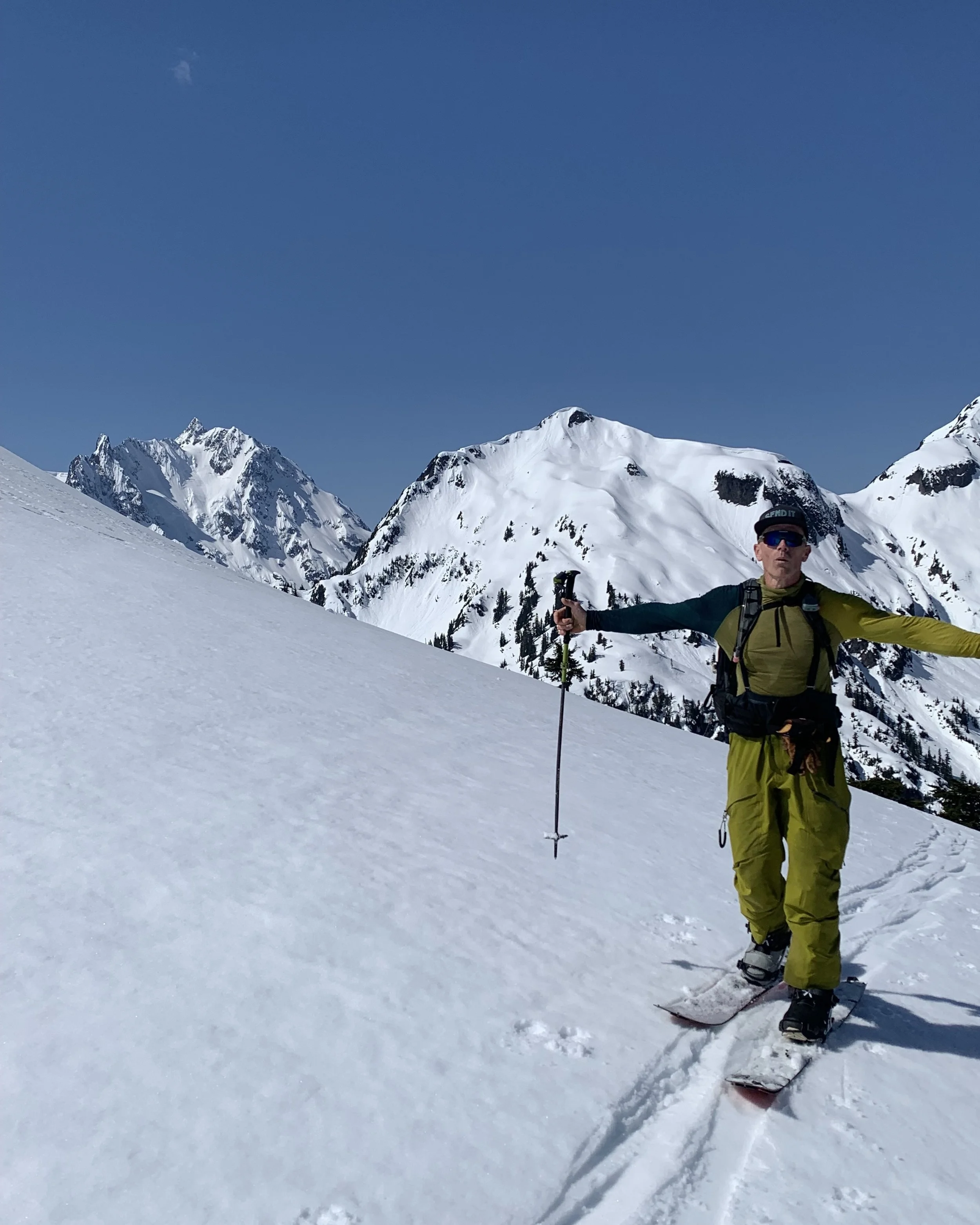
For me, the payoff from training has always been what it lets me do outside. More good turns. Stronger climbs. Enough left in the tank to enjoy the whole day, and the drive home.
That's how we think about training at Northwest Fitness Project. We build strength that carries into the life you live outside our walls, for any elevation from sea level to summit. If winter adventures are on your calendar, now is the time to start.
Want a coach in your corner this season? Come try a class at our Fremont or West Seattle studio. Your first one is on us. While you’ll see all of these exercises in our group training classes, we also have Personal and Partner Training available if you’ve got a specific goal in mind or are looking for our most personalized programming. Let’s make a plan and get started.
Train for your ascent.
Matt Holland is the co-founder/owner as well as a Peak Trainer at Northwest Fitness Project, a strength training studio with locations in Fremont and West Seattle. With over 22 years experience as a Personal Trainer, he holds his NASM – CPT, CES, & PES, NSCF, DVRT certifications in addition to spending every weekend of the winter and spring season snowboarding or splitboarding background.
